I had hoped to get this blog out several days ago, but I’m just chucking it on my page now. It will be for nobody in particular as ‘As You Like It’ has now finished in Stratford. Perhaps it will just be for me to look back on in my dotage. Middlemarch is still on for another couple of months though.
As You Like It
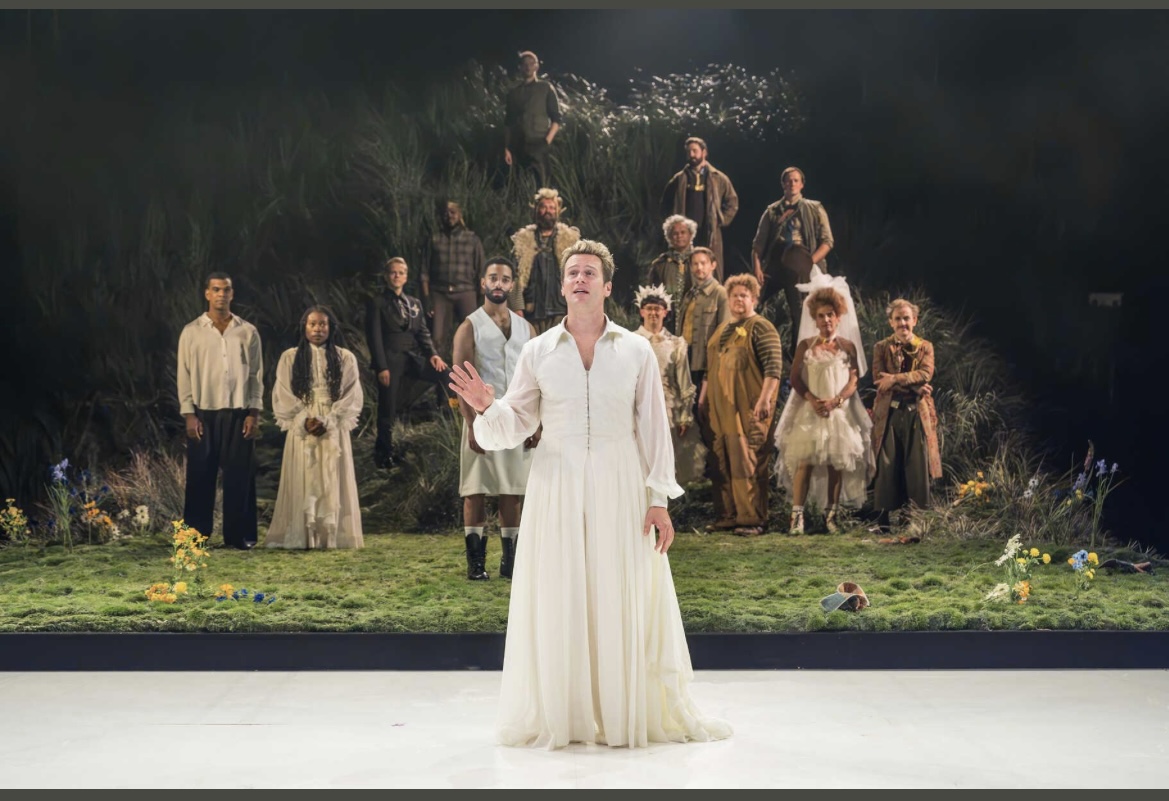
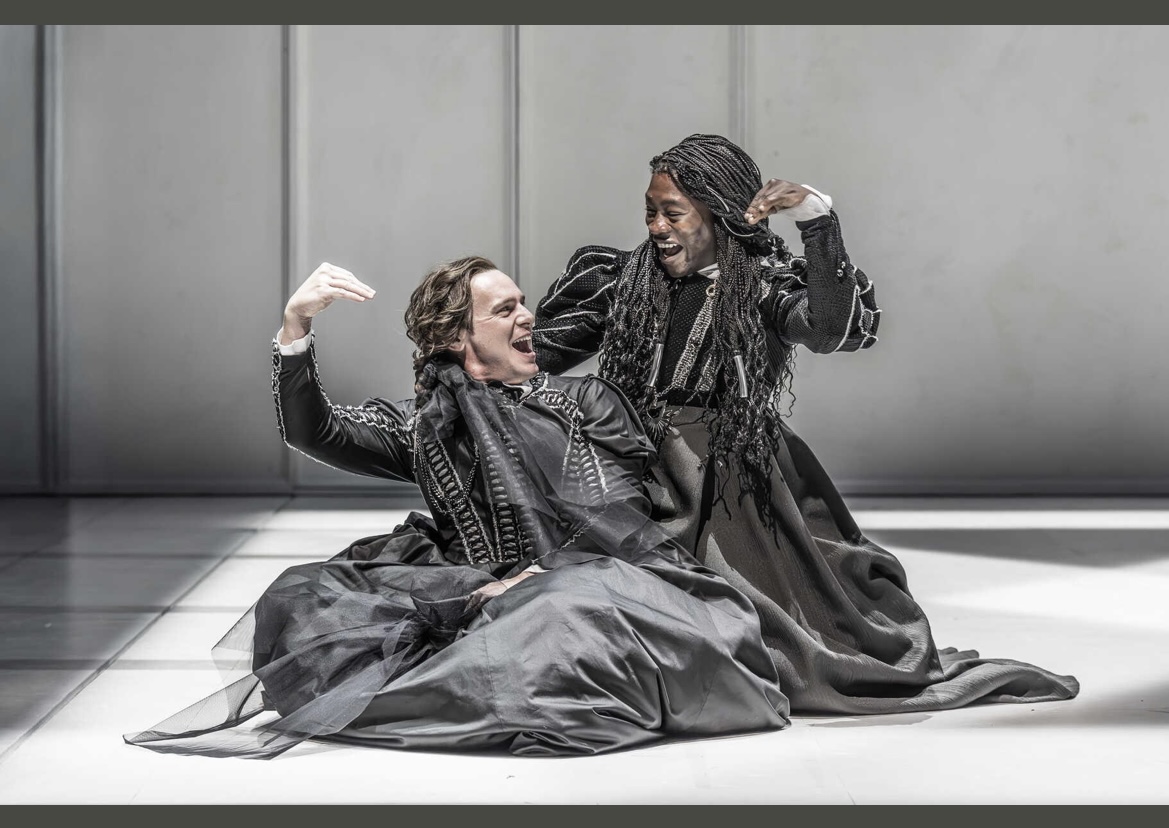
Anne was not sure about the play. It was an all-male cast for one thing, and she wondered if that might be gimmicky, and perhaps pantomimey. Granted, the actors in Shakespeare’s time would have been men and boys. But we’ve moved past that now haven’t we? So, what new insight would an all-male cast give us?
It was directed by a Welsh man, Daniel Evans, and he got a bunch of Welsh actors into the play, mainly in Duke Senior’s entourage. I don’t have a clue about the Welsh language, but when people sing in it something strange happens to my insides. Anne recognised at least two famous Welsh tunes (’Myfanwy’, and ‘All Through The Night’) that were sung for no especial reason, other than perhaps to imbue the bucolic scenes with a feeling of happy serenity, which it did for me.
By the time we got to the Forest of Arden, I’d got past the ‘am I going to be annoyed by the blokes playing women’ worry. There aren’t that many women in this play anyway. The two leads, Rosalind (Jonathon Groff, making his RSC debut) and Celia (Fisayo Akinade) had won me over by the time they did the swan dance (that’s the only way I can describe it – you had to be there). They weren’t overly exaggerating in their roles as women. It was quite the reverse. When Rosalind dressed as the man Ganymede, she/he wore very short leather shorts and periodically posed as a macho man in some excellent comedic moments.
The play was a sold-out performance with at least two classes of teenagers lining the seats in the gods. I honestly don’t think I have laughed so much in a long time. When Akinade had a moment and got the giggles where he wasn’t meant to, the audience was right there with him. There was a pantomimey bit but that felt like an homage to the art. Touchstone’s belle is Audrey, and she had the classic look – a bit rough around the edges, in the style of Les Dawson’s Cissy Braithwaite.
The play was superb, and although everyone was brilliant, as a debut, Groff’s performance was quite stand out. Plus, I didn’t realise until afterwards that Duke Senior was played by Gary Wilmot, who I remember on the telly as a kid. Even the teenagers gave a standing ovation, and I’m so, so pleased they got to see this as hopefully it will go a long way to help them form a positive view of Shakespeare.
There were times where some of the lines jumped out at me more because it was an all-male cast, which reminded me that in Shakespeare’s day everybody would have been in on the joke. But to be honest, because all the cast were so brilliant, I often didn’t think about it.
We see a lot of Shakespeare plays at Stratford, and most of them are pretty good, but occasionally we get something truly special and this was one of those plays. It is a comedy in the archetypal Shakespearian sense. Cross-dressing, liminal spaces, resolution with a mass wedding. It could so easily come across as a tired cliché, but it had a wonderful energy and left me feeling joyful.
Middlemarch
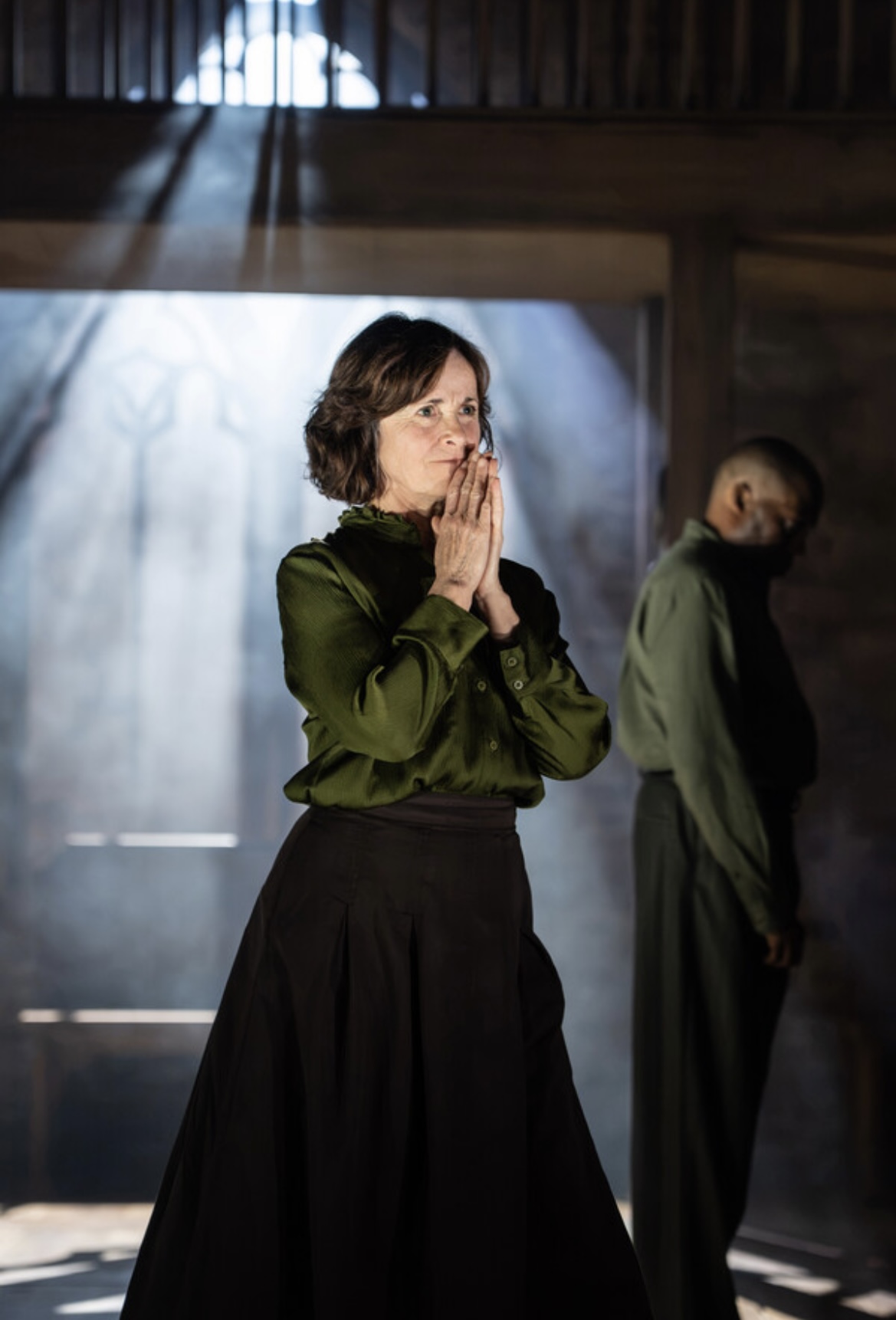
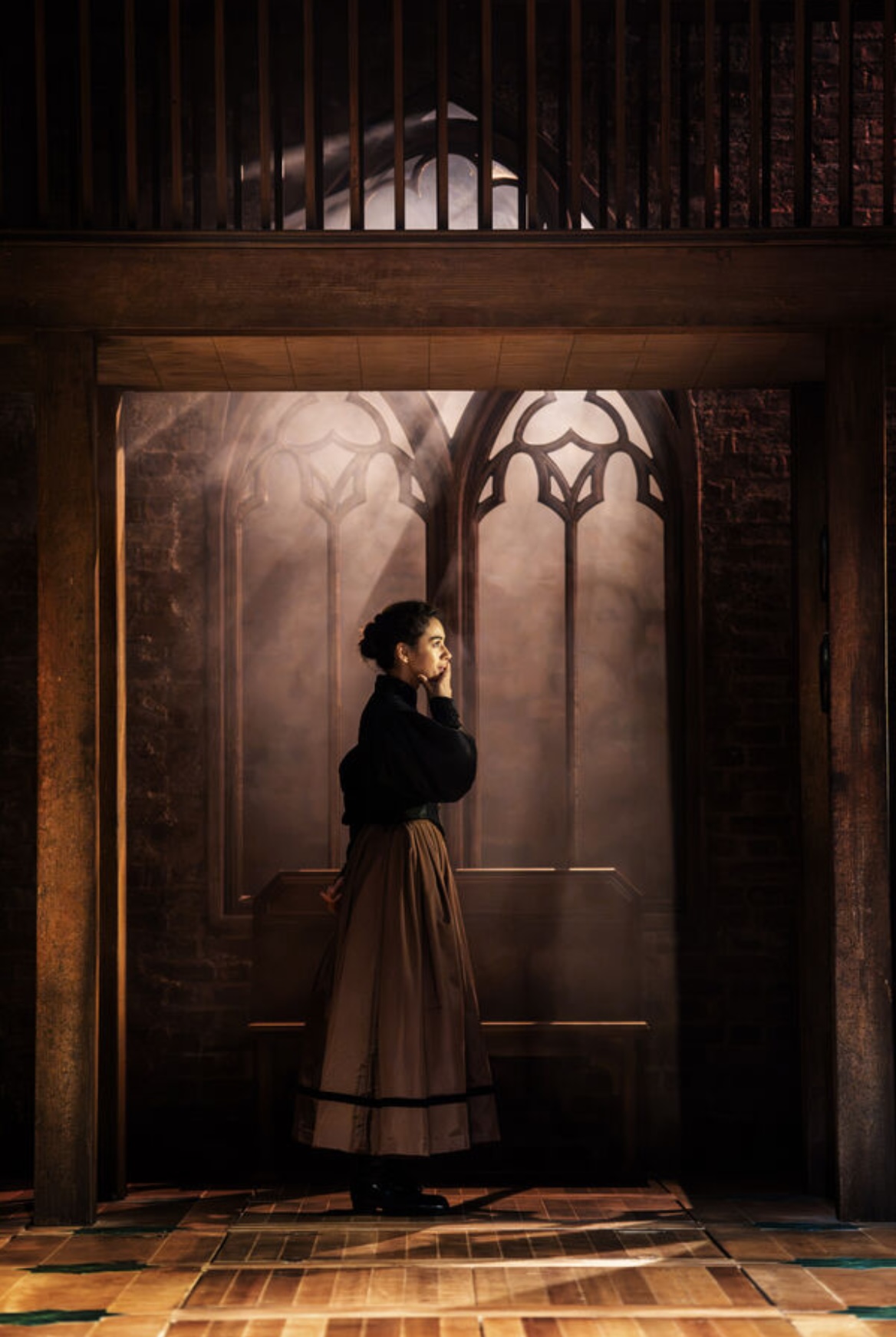
I still haven’t finished the book, but I have found it a revelation. It is funny. It is clever. It is insightful. And did I tell you it was funny? I don’t remember Dickens being that funny and he had his moments. I got to about halfway through before we went to see the play, in two parts at Stratford.
I wasn’t sure how they were going to create a stage performance of a very large book – well over eight hundred pages in my version – even if it is in two parts, but having so enjoyed what I had read, I was looking forward to it. It was adapted by Nina Raine and directed by Jeremy Herrin.
The narrator in the play begins with a section from the middle of the book.
Your…surface of polished steel made to be rubbed…will be minutely and multitudinously scratched in all directions; but place now against it a lighted candle as a centre of illumination, and lo! the scratches will seem to arrange themselves in a fine series of concentric circles round that little sun… The scratches are events, and the candle is the egoism of any person.
Although in the book, Eliot links those words specifically to Rosamond, the play uses this parable for all the main characters, especially the younger ones.
Middlemarch is mainly about Dorothea Brooke but it is an expansive work that brings to life so many of the inhabitants of Middlemarch. It is like a soap opera, and I mean that in a positive way. The play follows, in particular, the aspirational lives of Dorothy, Will Ladislaw, Fred and Rosamond Vincy, Mary Garth and Tertius Lydgate. They all have hopes and dreams which are variously hampered by idealism, profligacy, hardship, or just plain egoism.
The narrator, in the play, is sometimes an actor in the proceedings, sometimes she talks to us, and sometimes very cleverly, she talks to the individual characters, and acts as a conscience or a sounding board. Occasionally, she is George Eliot, with small moments of her own life bleeding through.
The first play ended almost precisely at the point that I had read to, which was the Will reading. We had a few hours in between to eat as we were taking the plays in one day. I guess that seems quite intense, but it’s a bit like binge watching, and anyway, I was at the point that I had no clue what was going to happen next, so I was chomping at the bit.
I did worry that I’d get confused, not knowing the story in the second part, and I couldn’t press rewind on the play or put the subtitles on. It was completely fine though, maybe because I knew who most of the characters were. All the sub-plots seemed to weave in and out of one another effortlessly. I now know the ending before I carry on with the book, but I also know that the play by its very nature had to leave the details out, so there is still plenty for me to enjoy.
The play was very good, and it was amazing that it used so much of Eliot’s lines – harder than you might think to do when you’re moving a book to a play. She does do dialogue very well. If I hadn’t already begun the book, the play would have enticed me to give it a go, and I hope that it does that for other members of the audience too. I honestly need to dig deeper into this extraordinary woman, Mary Ann Evans aka George Eliot, because this work is astonishingly good.

