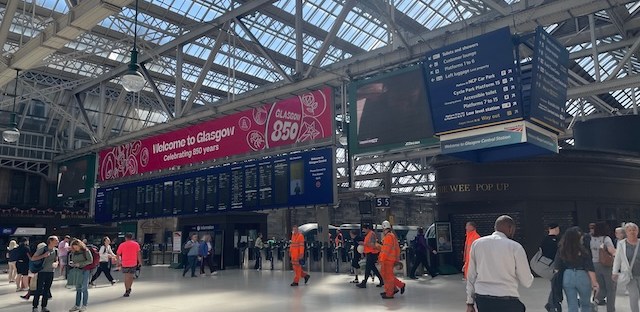
Stepping off the train in Glasgow, we felt for a moment that we were back in Liverpool. There was the same glass and iron roof that we’d left just a few hours ago, and I wouldn’t be surprised if it was the same pigeon, or at least its cousin, nonchalantly strolling around the concourse, paying no heed to the criss-crossing commuters. Although Glasgow station was built a few decades later, Liverpool, whose curved roof was completed in 1849, had obviously set an architectural trend for main line stations all over the country.
Neither Anne nor I had ever been to Glasgow before. We’ve been to Edinburgh a few times, and even, once, driven up the west side of Scotland as far as Ullapool, but completely missed Scotland’s largest city out. It warranted a holiday of its own, rather than being a small part of a road trip. So, finally, using my big West Highland Way Walk as an excuse, we have tacked a couple of days ahead of that starting, and have come up on the train to dip our toes in.
As train trips go, it was rather pleasant. Just a short three-and-a-quarter hours from Lime Street, and we got to travel through some beautiful countryside: sheep in green pastures, mountains and valleys, rivers, and a beautiful viaduct that I was too slow to capture on my camera. There is something majestic about a viaduct reaching across, with its arches and columns spanning the space between the hills. I think the one we saw was the Lowgill Viaduct in Kendal, built for the trains at the height of the Industrial Revolution, but, sadly, no longer in use.
Both Glasgow and Liverpool grew exponentially in the nineteenth century, as the fires of industry and empire grew white hot. The population in the two cities was similar in 1801, at around seventy-seven thousand, and both were nearly ten times that by 1901. You can see, when you look up above the shop fronts, that the architecture of so many of the buildings in both Liverpool and Glasgow, is grand, with Georgian and Victorian styles, built by the rich merchants whose pockets bulged with the profits from the coal, cotton, and slavery generated in this time.
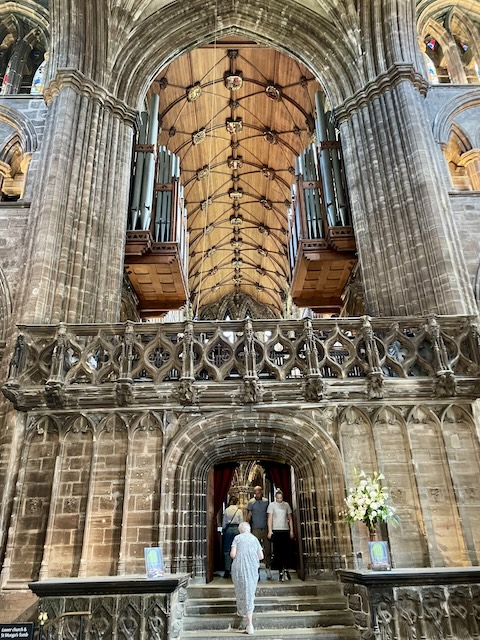
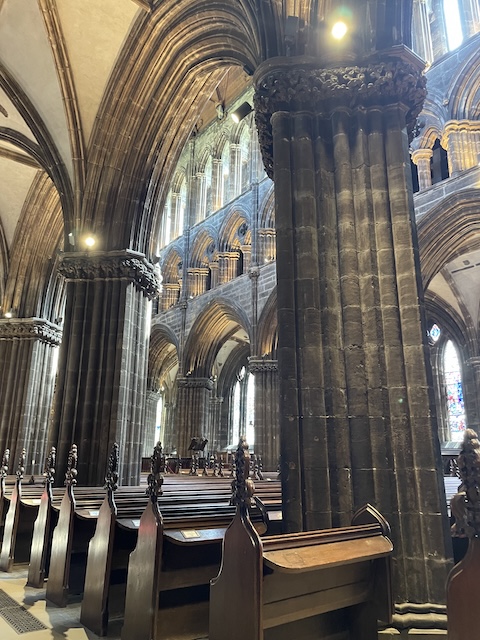
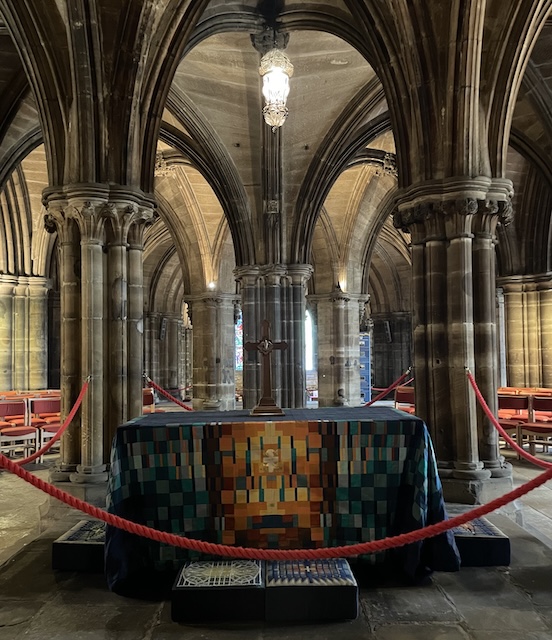
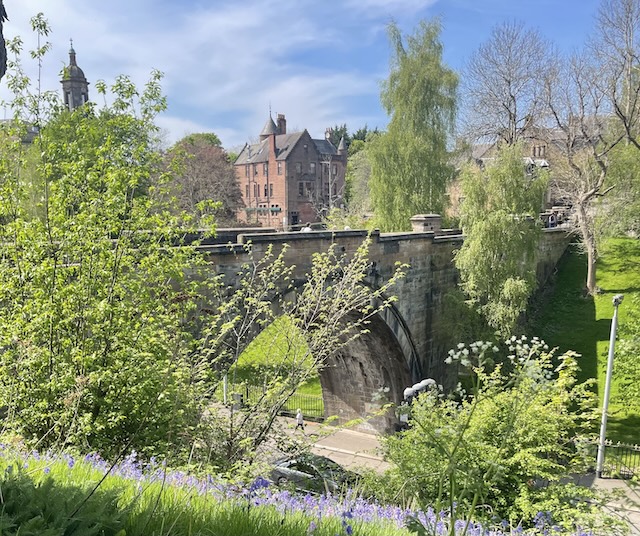
Glasgow beats Liverpool in age: we visited the Cathedral which was consecrated in the twelfth century decades before Liverpool was even officially a town. Its roots as a building go back even further when St Mungo founded a monastery here. His tomb is in the crypt of this beautiful medieval building, a wonderfully cool spot on a day when the temperature outside was in the twenties. When we stepped outside again, we walked across a bridge just by the cathedral, into another city. The city of the dead.
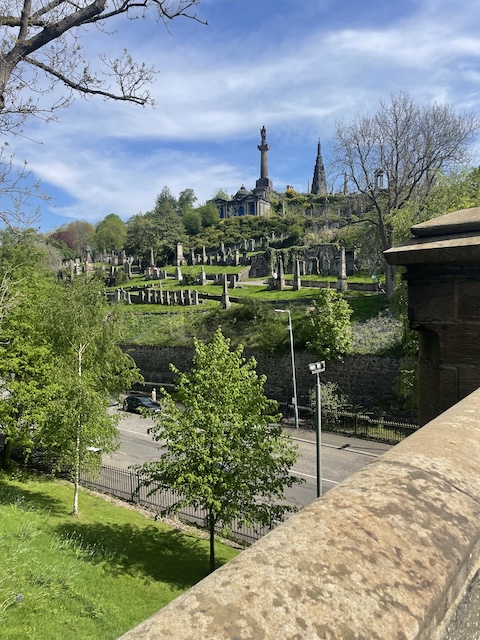
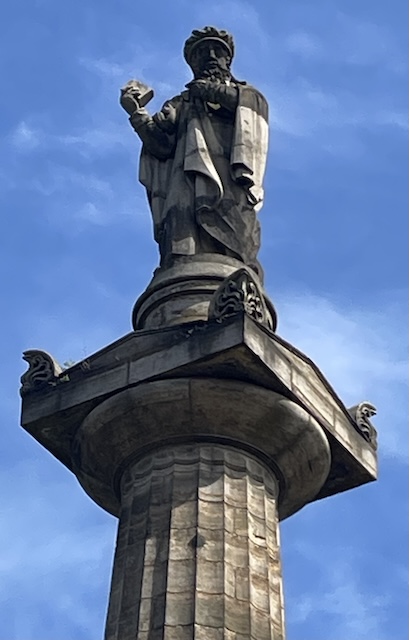
Paris’s Pere Lachaise cemetery sparked a fashion for private cemeteries, and when the law in this country was changed to allow burials for profit, Glasgow’s Necropolis lead the way in grand fashion. Built on a hill, with a monument to John Knox (although his body isn’t here) right at the top, there are around fifty thousand people buried, although there are less than four thousand monuments. The closer the burials were to Mr Knox, the more expensive the plots became apparently. We couldn’t see any weeping angels (thank goodness), but there was a trend for stone urns with veils, and obelisks. The place doesn’t have the celebrity cachet of Pere Lachaise or Highgate Cemetery in London, but its meandering paths and views of the city make it a lovely way to spend ‘a dreaded sunny day’*, even without Keats, Yates or Wilde.
Alongside the industry and commerce, Glasgow was, and is, known for its art. This morning, we took a twenty-minute bus ride to Kelvingrove Art Gallery, a very grand Victorian building to the west of the city. It holds a nice collection of museum artefacts, as well as some terrific works of art. The Four – (Charles Rennie Mackintosh, Margaret and Frances Macdonald and Herbert Macnair), designers and artists at the forefront of the Art Nouveau movement have a section in the gallery. There is also work by some of ‘The Glasgow Boys’ and ‘The Glasgow Girls’, and I really liked the way the gallery created a narrative history of how all these artists were influenced and influenced others. I didn’t feel as exhausted as I sometimes get with looking at art because the captions helped to put the pieces into a context.
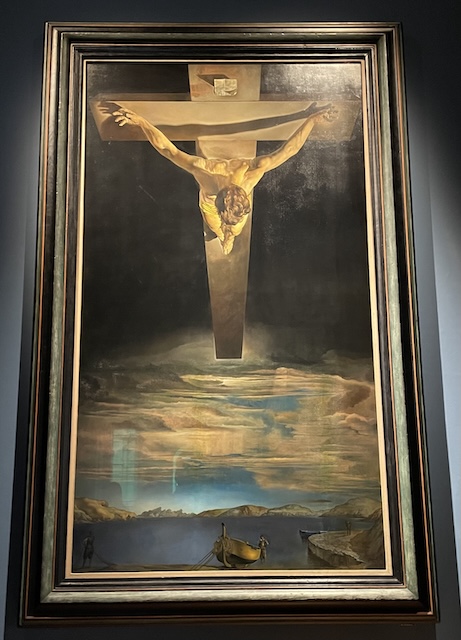
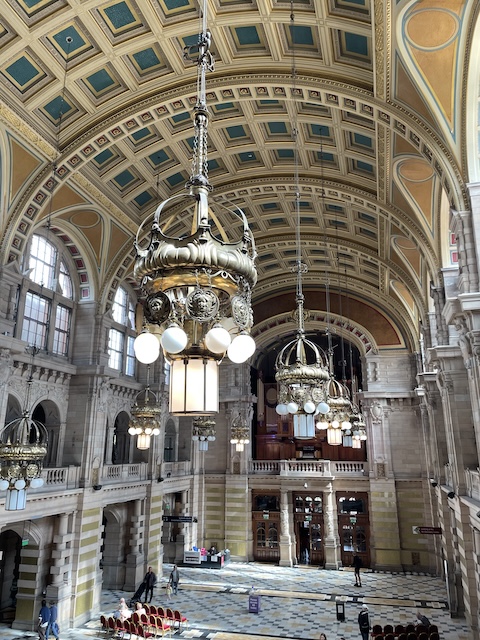
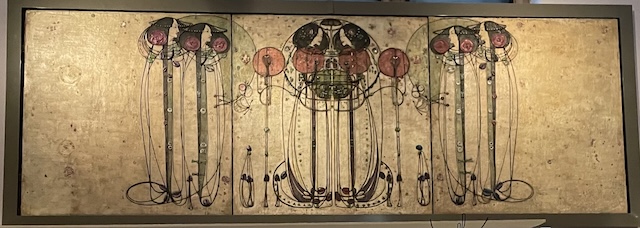
The highlight of the gallery was not a Scottish painting, but a Spanish one – Dali’s ‘Christ of St John of the Cross’. He painted this in 1951, and Glasgow bought it from him in 1952. At the time the price, £8,200, was seen as controversially high, but the painting has more than paid for itself. It’s an image that is well known, but like so many works of art that get hackneyed in tote bags and coasters, nothing can take away from seeing the original work. It is in a small room of its own. The cross looms in the dark above the skies, and there are no visible nails in the Christ’s hands or feet. Instead, we look down at his head as he looks down at the earth, with his arms reaching gracefully back like a bird in flight. He looks like he could envelop the Earth, but he holds back, or do we hold him back? It is a beautiful work, and in a building that is free to enter and asks only for donations, so I can’t recommend it enough.
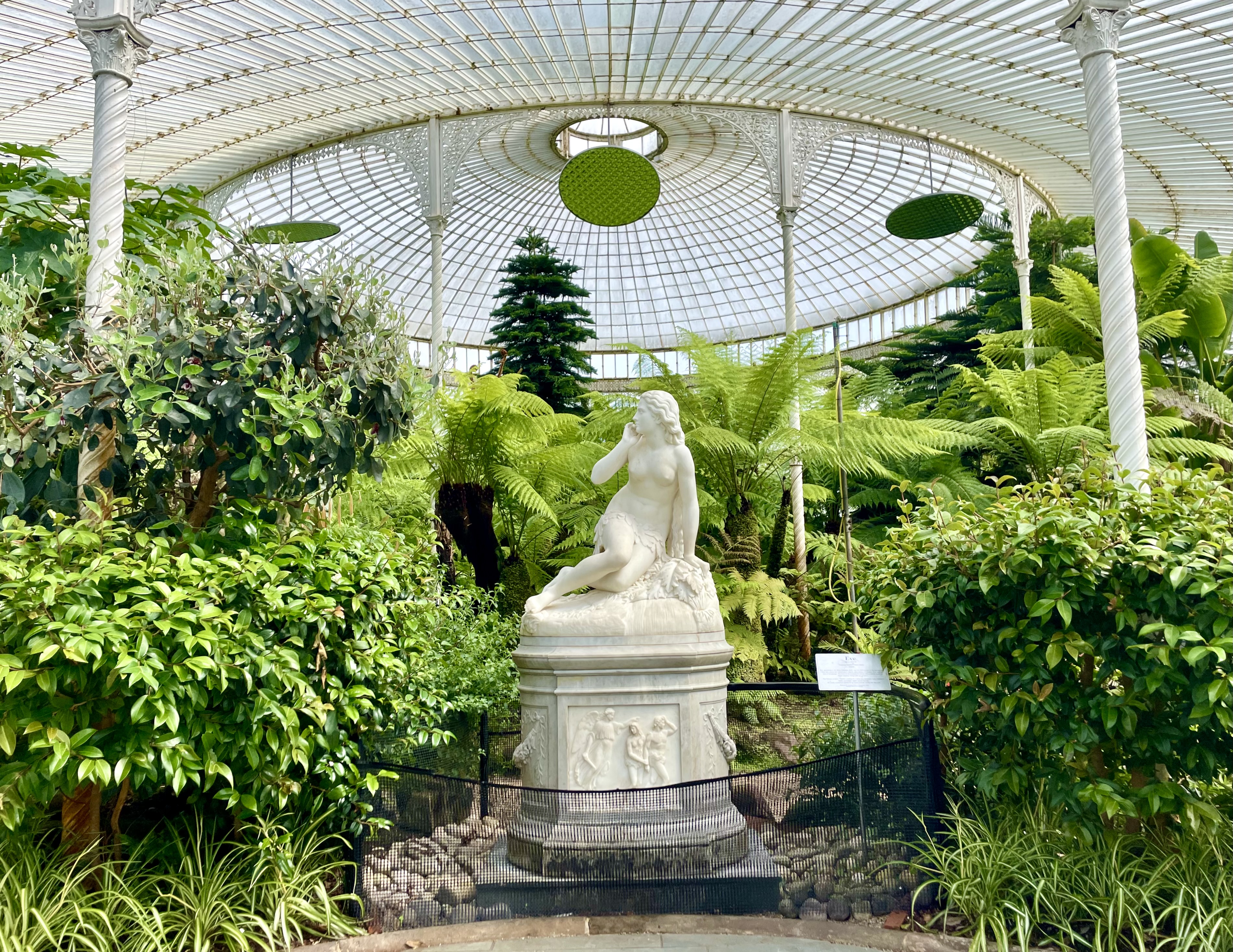
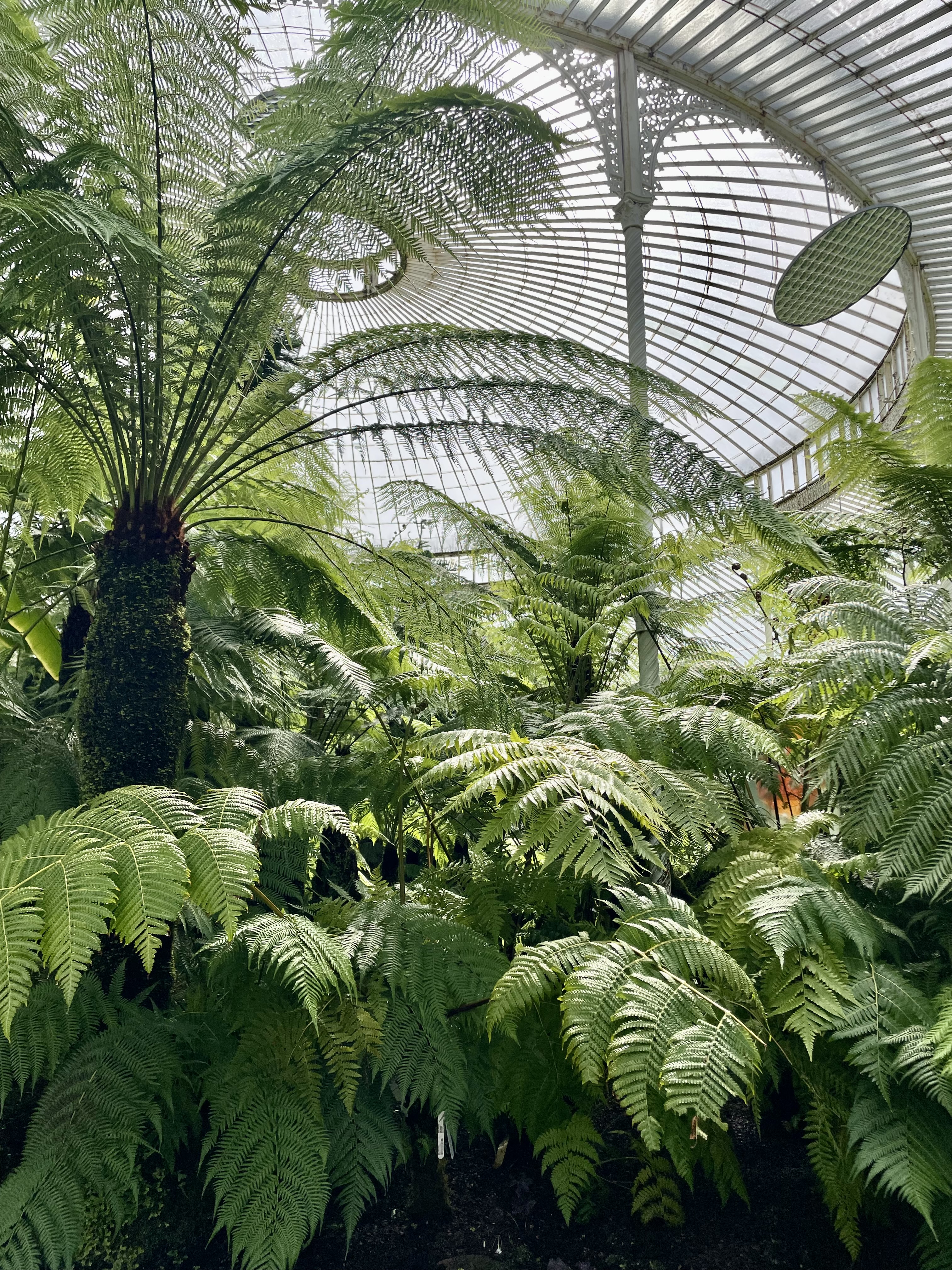
Just a short twenty-minute walk, along the river Kelvin, and up Byres Road, Glasgow boasts another first, or at least a first before Liverpool. The Botanic Gardens’ Kibble Palace is much larger than Sefton Park’s Palm House, and is a couple of decades older. Evidently Liverpool, after knocking up a fine architectural statement with its railway terminus, must have rested too long on its laurels.
*A reference to The Smiths song, ‘Cemetery Gates’.
 theleadlesspencil
We visited Glasgow for my birthday last July. We loved it too. If you have time, get the train out to Helensburgh to visit The Hill House, designed and built by the very handsome genius CRM and now undergoing an amazing restoration. Loved reading your piece about other sights we missed first time round. Will check them out next time – we’re definitely going back, especially as there’s a direct flight from Newquay!
That will be next time for us, although it sounds like quite a spooky name – evidently named before Shirley Jackson’s story!
There seems to be a lot of construction work going on in the city at the moment , but despite that, we loved our initial visit. Our bijou room in Motel One (right by the station) is in a handy location for the buses and metro as well as the trains.