North Cyprus covers, roughly, the top third of the country. And given that it is squat and wide, you would normally be travelling across it between the east and the west.
The northern edge is covered by the Kyrenia Mountain range, often called the Five-Finger Mountains after one of the central peaks that has five sharp points. The range acts like a jagged wall all the way across the northern arc of the island, right to the tip of the swordfish style beak at Cape Apostolos Andreas.
We went all the way there on day two, to St Andrew’s Monastery, where, supposedly, a water spring that the apostle had generated when he struck the rocks with his staff, apparently still flows. Historically, the monastery dates back to before the twelfth century – it had been a popular site of pilgrimage before 1974 – and restoration work on it has been agreed and started. A hard thing to achieve in this contentious land. I didn’t see any miraculous spring, but I did see an angry donkey.
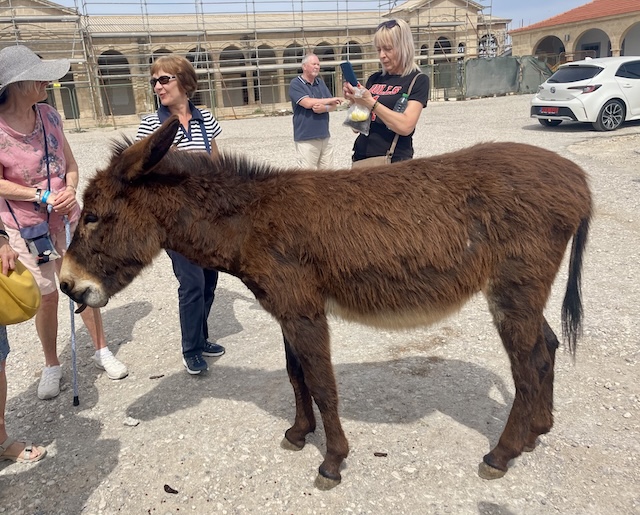
Tourists are encouraged to buy bags of carob pods to feed the wild donkeys that roam this area. Anne had done just this (in her ‘good life’ dream world, she would keep a donkey in the back garden, as well as a goat and chickens). Unfortunately, so had many other tourists and the three donkeys that were around at the time did their very best to chew their way through so much food. All at once, one of the donkeys hee-hawed in a very aggressive manner and shunted at the other two, causing them to gallop away and occasionally kick back as it chased them around. People had to scarper out of their thundering path.
I’m not sure if all that carob went to its head, but I think Anne is a little less keen on having a donkey now – hopefully.
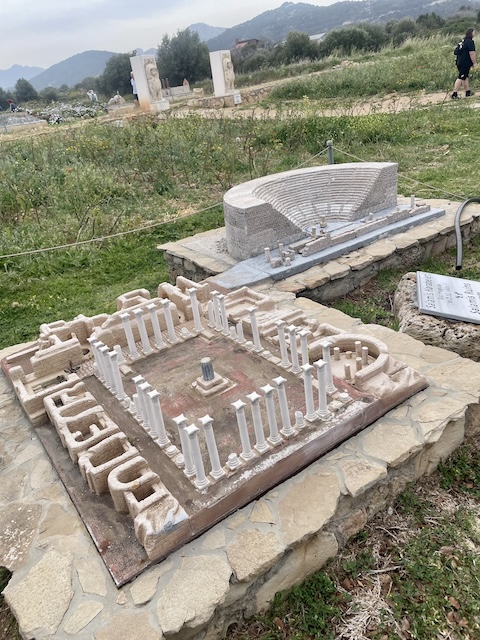
Before reaching here, we’d stopped off at a small place showing off lots of the main buildings of Cyprus, in miniature, including a fine rendition of the Salamis ruins, that was, while I watched, being invaded by an army of ants, who seemed to be scurrying past the amphitheatre, heading down the walkway with the square of columns to their right and disappearing down a hole in the latrines.
The Minia Cyprus museum showed just how much historical architecture the island holds, showcasing the work of the multitude of colonisers flexing their architectural muscles on this land.
We also had a loo stop in Dipkarpaz, a town where Greeks and Turks have never fought each other, and still live side by side, with a church and a mosque standing in close proximity to one another.

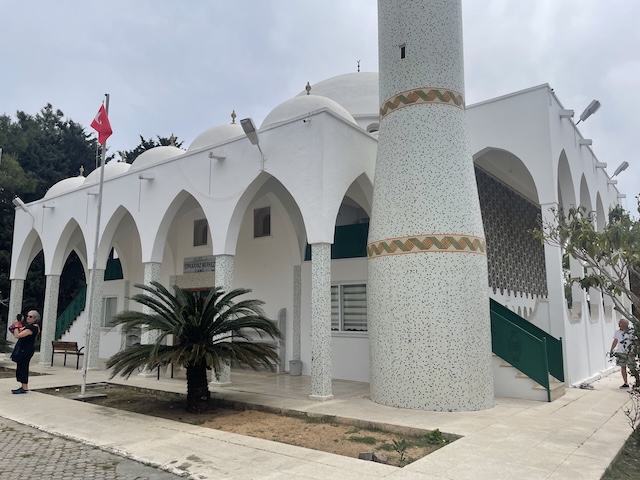
Osman, a man who can ramble on quite happily through his microphone on the coach, had been telling us about the medicinal benefits of carob syrup – it’s a tree that is grown widely in this part, along with olive trees – and when I saw some being sold by a women’s cooperative here, I had to buy some, along with some incredibly tasty cinnamon pastries.
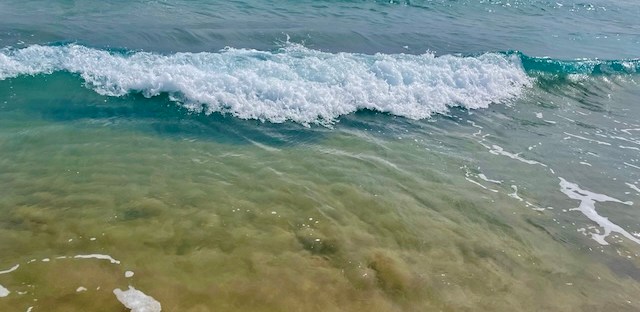
Our two stops on the way back from St Andrews were a very tasty fish restaurant and the Golden Sands beach, on the south side of the peninsula, which very much lived up to its name. I should have put my cossie on because the water was not that cold, even in March, and the water looked beautifully clean. But I just had to make do with tucking my dress into my knicks and splashing around like a kid for twenty minutes.
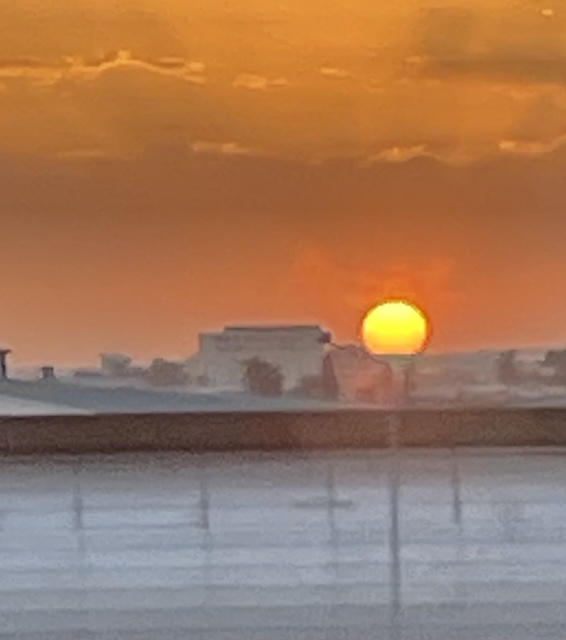
The Five Finger mountains were to our right as we wended our way back for our last night in Nicosia. Far to our left, we could just make out the silhouettes of the Troodos Mountain range, which cuts a swathe through the middle of the country. It sits on the Greek side and is a much higher range. Holding water reserves in the shape of snow at certain times of the year which the Kyrenian mountains are too low to do. The sun ahead, gave all of us in the coach a final show with a rather spectacular descent.
Heading back east to Famagusta the following day, we again trundled between the two mountain ranges. Along our very well-built road, we saw the hay bales scattered around the fields as it was harvest time for some plants now. They were either left to dry in straw cylinders or wrapped up, looking like bolsters abandoned from a soft play area.
Osman, nonchalantly swapped between using Famagusta and Mağusa (or Gazimağusa as the North Cypriots called it after the war). He is good like that – he doesn’t put forward any judgement – unless it is about the properties of carob.
The walls of the old city are incredibly thick, because the Venetians strengthened or rebuilt the walls put up by the Lusignans who were a branch of French kings that had gone crusading with the Western powers and decided to take control of Cyprus on the way. But its history is centuries older, having been made the principal port after Salamis was destroyed by earthquakes.
The old town is small but teeming with historical architecture, from the impressive walls, churches and castles (when the English saw the castle walls here, they decided it would have had to have been used by Othello and randomly put up a bust of William Shakespeare near by).
There is a splitting of the city here like with Nicosia, which is the only remaining divided capital in the world. For Famagusta, the area of Varosha, a resort that rivalled Monaco for the rich and famous people who came, with the likes of Elizabeth Taylor and Brigitte Bardot taking the golden sands of the southeast coastline.
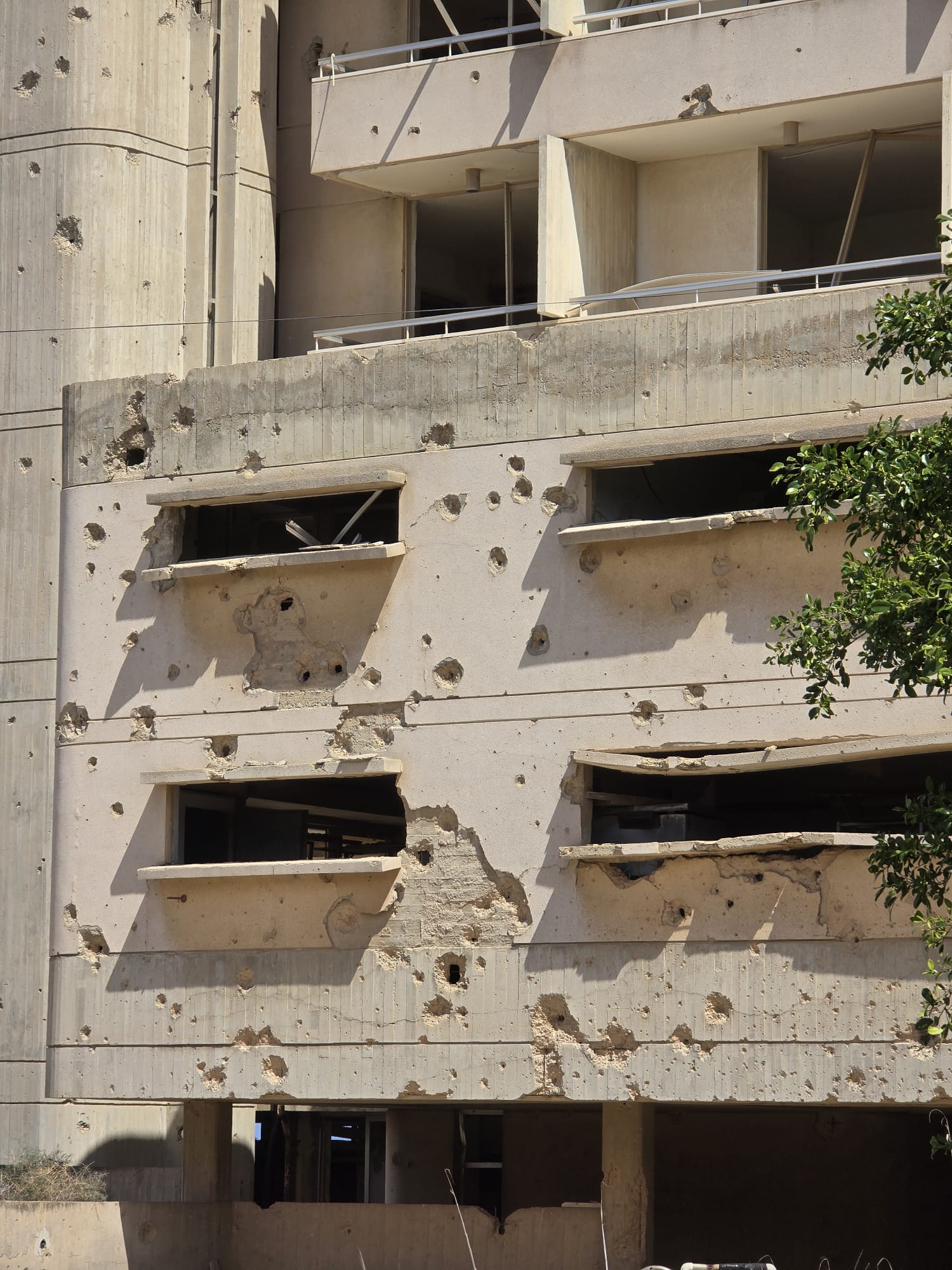
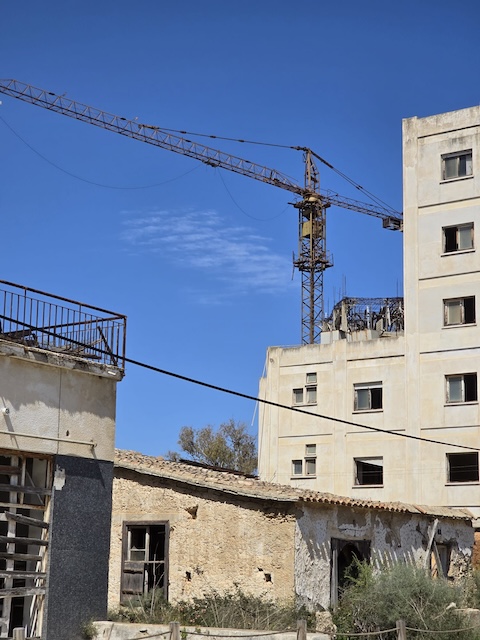
When the Turkish army came onto the island in 1974, the entire Greek population of this area abandoned it. It had stood as a ghost town ever since, following initial skirmishes and looting. It has only been reopened as something like an open-air museum in the 2000s, so that people like me could walk through its eerie streets and see strange things like a fifty-year-old crane rusting next to the construction site it had been helping to build. We aren’t allowed into the buildings; a lot of them look in danger of caving in, but it felt like walking through one of those post-apocalyptic movie scenes.
We ended our day in a ‘garden’ hotel on the outskirts of Kyrenia in the north. There was a stunning smell of orange blossom as the porter whizzed around the darkening paths and walkways to take groups of us to our rooms, which looked quite colonial in style. Some of the coach party got a little lost going from the room to the restaurant in the evening. Given that the average age of this tour’s group is a couple of decades above mine, it might not have been the best situation of a hotel, but nestled into the Kyrenian Mountains as we are, I’m finding it quite beautiful.
 theleadlesspencil
I was waiting for an Othello mention! Glad to know there is an appreciation of the Bard as strong in Cyprus as there is in Bebington. Your trip sounds really interesting. I loved the description of the ants in the model buildings scurrying down the latrine hole. Poor donkeys. Probably sick of carob. I would be in their place!
Safe journey home x