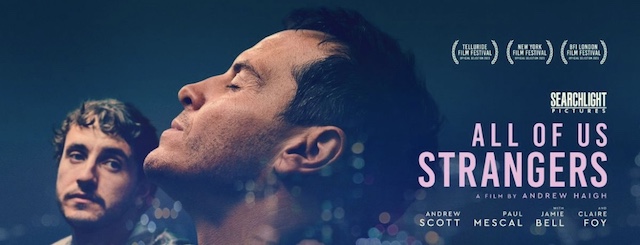
I’ve been thinking about this film on and off, since we saw it last week. It is definitely one of those films that might get refined in your head on a second viewing. Not refined in the sense that you could answer all the questions it poses, but in the sense that the familiarity settles around you like a snug blanket.
I would like a second viewing but to be honest, it was lucky that we saw it at all as Anne and I rarely get out to the cinema. I don’t know why we don’t go more often, given that we are supposedly ladies of leisure, but it’s surprising how many other things manage to squeeze themselves into those idle hours. We did, for this film though, taking ourselves all the way to The Light in New Brighton, a nice independent cinema.
I’d heard about it first, on the Kermode and Mayo podcast. Despite the fact that I rarely watch films, I listen regularly to this review show for the boys’ witterings. Mark Kermode often says that a lot of what you get from a film is what you bring to it. And I feel like there were a lot of parallels between me and the main protagonist, Adam.
Andrew Haigh, the writer and director, had adapted it from a Japanese novella, called Strangers by Taichi Yamada, which I’m in the middle of at the moment. He’s made a lot of changes, but kept the initial core premises, at least in so far as I’ve read.
The main protagonist (in the book he’s called Hideo) lives in an apartment set in a high rise building, almost completely by himself, aside from one other person. His life is in a slump, and he decides to take himself back to the neighbourhood where he grew up as a child. He meets his dad and then his mum at the age that they were when they both died in a car crash when he was twelve, but they greet him as an adult.
I had expected that in the book, this first meeting with his parents would happen as seamlessly as it does in the film, perhaps even more so. In my mind, for whatever reason, I thought that the divide between the living and the dead in Japanese culture was less stark than in the Western world, but what do I know? In the book (perhaps because it is a book) Hideo is internally overwhelmed, and can’t believe it. Feeling, I guess, how I might, if I saw my folks again, especially my mum, who died nearly twenty years ago. Whereas Andrew Scott, as Adam, has only this look of ecstatic bemusement at being able to meet and talk with his mum and dad, That was one of the first questions that popped into my mind: why is Adam not more incredulous? There were many more as the film went on.
I was trying to date the year when his parents were killed, and by the references to the threatening Iceberg adverts about AIDS and the Pet Shop Boys release of the song, You Were Always On My Mind, I think it was around 1987. It was important to me because I was around fourteen then, just a couple of years older than Adam. He was a young gay boy suffering school bullies in Dorking, a suburban nowhere land. I was also young and gay, in an equally nondescript part of Coventry. Luckily for me, I didn’t suffer such torments at school, possibly because, as a small Indian girl, there were no expectations for me to fit any moulds.
But I did feel like I had a split personality, forced to keep an aspect of myself hidden, knowing that the world in general wasn’t that keen on us. With a statute of law, Section 28, prohibiting teachers from ‘the teaching in any maintained school of the acceptability of homosexuality as a pretended family relationship’, I also remember an older relative calling a comedian on TV a ‘poof’, and these realities made my teenage days quite painful sometimes.
As Adam, as an adult, comes out to his dead parents, and they love him just the same, I felt lucky that I had that reality while my folks were still alive. I also counted myself lucky that I no longer had that fear and loneliness that Adam still has.
It is a film about loneliness in the first instance, and the fear of making yourself vulnerable with another person. The building where he lives, is cavernously empty, shown starkly, when the fire alarm goes off at night, and he dutifully goes down and into the carpark, only to find himself alone, and visible is just one other light in the huge rectangle of dark windows. He and Harry (played by Paul Mescal), the other solitary person in the building, begin a tentative, gentle relationship, after Adam first meets his parents. It’s as if that reconnection opens him up a little, brings down his defences and allows Harry in.
Jamie Bell and Claire Foy play his parents, so it is a stellar cast, and that’s important because for a film where so much happens with very little plot, they all bring their A-game. The levels of understated but evident emotion that play upon their faces just made me believe everything. The questions of whether these are ghosts or in Adam’s mind is not really the point. The point is that loneliness is real, fear is real, and love, a deep, unconditional, limitless love, can also be real.
 theleadlesspencil
SPOILER ALERT.
DO NOT READ IF YOU INTEND TO WATCH THE FILM OR READ THE BOOK.
HOWEVER, THE FILM IS 5+++ STAR AND A MUST WATCH FOR ALL THE REASONS SET OUT BY RITA.
I totally agree with your thoughts here, Rita. About the film and much else. The movie has also been preoccupying me since we realized that we were both about to sit down to watch it at the same time on the same day in different cinemas at opposite ends of the country. Spooky.
I also read the novel this weekend. I enjoyed it, but while it threw some interesting light on how to read the film, I didn’t find it as complex or challenging as the movie. Loneliness and isolation were definitely the main themes of both, as you say. Coincidentally, today I read an interview, in ‘Attitude, with the director, Andrew Haigh, who confirmed this as well as describing how he drew on much of his experience, like many of us, of growing up queer in the 1980s.
For what it’s worth, my reading of the film is that the viewer is watching the playing out of the screenplay we see Adam writing at the start. It’s his catharsis through creative writing. Through his imagination, he is able to turn his experiences and emotional isolation into an objective creation which he can rationalise and use to overcome the negative feelings holding back his life. It enables him to find inner peace and move on positively with his life. That said, this reading also leads to the conclusion that all the other characters are fictional (at least in the present day) including Adam’s new lover, Harry, who, like Kai, in the novel, has actually been dead for most of the time we see them interacting with the protagonist. However, Adam’s love for and happiness ‘with’ Harry is seen as real, fulfilling and consoling, regardless of whether or not he exists, just like the enduring love of his dead parents which continues to comfort him.
That’s a great theory. I think Harry is real. His ending is just too sad to make an imagination in my head. But I guess he could be a possible path that Adam might have trod. Lots of possibilities.
See what you think when you get to the end of the novel.
Beautifully reviewed. Mark Kermode, eat your heart out.
Thank you. Was a really lovely film