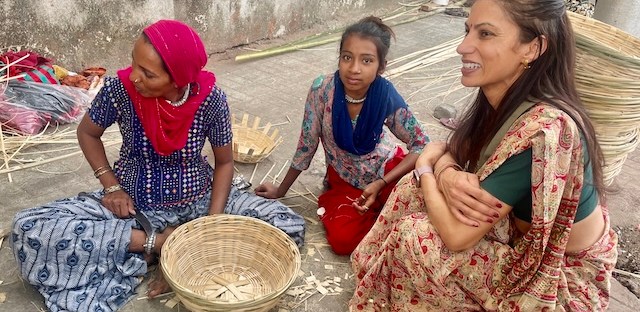
Madhu sits on a mat on the ground and works away while she talks to us. Her eight-inch curved blade pushes down the thin bamboo strips as she weaves them through the vertical warp of her basket. She could probably do it with her eyes closed, she has made so many. Her silver jewellery flashes in the sun as her hands move to a monotonous rhythm. She is from Rajasthan, she says, but she has lived in this part of Mumbai with her family, for over forty years.
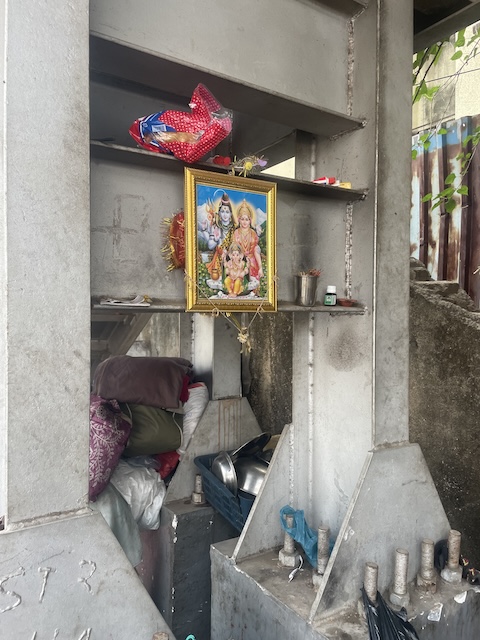
Their home is right here, under this bridge in an area called Mahim. It is just behind the Dharavi Slum made famous by the film ‘Slumdog Millionaire’, but getting into that quarter would be a massive step up for Madhu. I spot possessions tucked into one of the footings of the bridge. Some pots, bundles of clothing, a holy portrait. How much can you collect over forty years when you need to carry it all on your back at the drop of a hat?
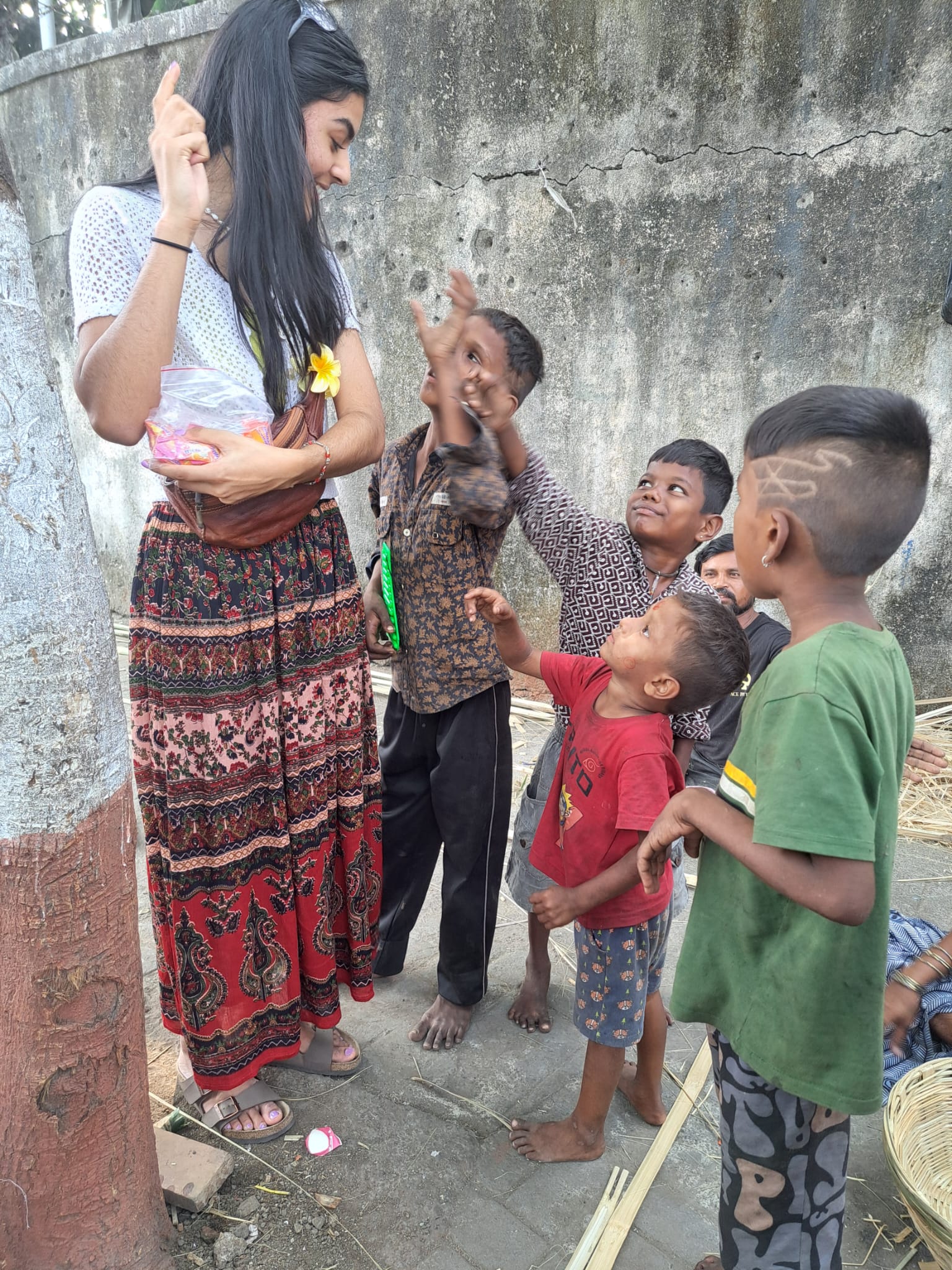
Some young inquisitive children come to see what we are up to. When Maia pulls out a bag of sweets, their little hands shoot forward. They know her instruction of ‘just one’, but a couple of the cheekier ones hold out their other hands for a second, laughing as they do. They should be in school right now, but they’re not registered anywhere. They’re related to Madhu or to the two other Rajasthani families who also live and work here.
When I jumped on my sister’s family holiday, they told me that it wouldn’t be all fun and games but would include a little work. My brother-in-law, Bhupendra, runs a charity (Kamla Foundation) that partners with organisations in India, and helps them expand their reach. For the last couple of years, he’s been working with Pehchan, an NGO advocating for the rights of homeless people in Mumbai.
It takes Bhupendra a long time to find projects that use their resources efficiently, do what they say they do, and make a tangible difference. What impressed him about Pehchan in particular, was their multi-pronged efforts to deliver that difference. As well as directly working with the people themselves, they liaise with academia, corporations and the Government to push for their cause.

I found all this out the day before our ‘field visit’ when the team kindly gave a presentation into the work they do, in a small apartment on the fourth floor of a building that was essentially their office. Space is at a premium in Mumbai.
The word Pehchan means ‘Identity’. Without basic forms of ID, people in India can’t access social welfare, or do things like open a bank account, buy a train ticket or vote. They’re invisible, and have little recourse to aid when the Monsoon floods arrive or the heat is oppressive. Clean water and medicine are luxuries, and they are prey to harassment and violence, not least by the local authorities and the police.
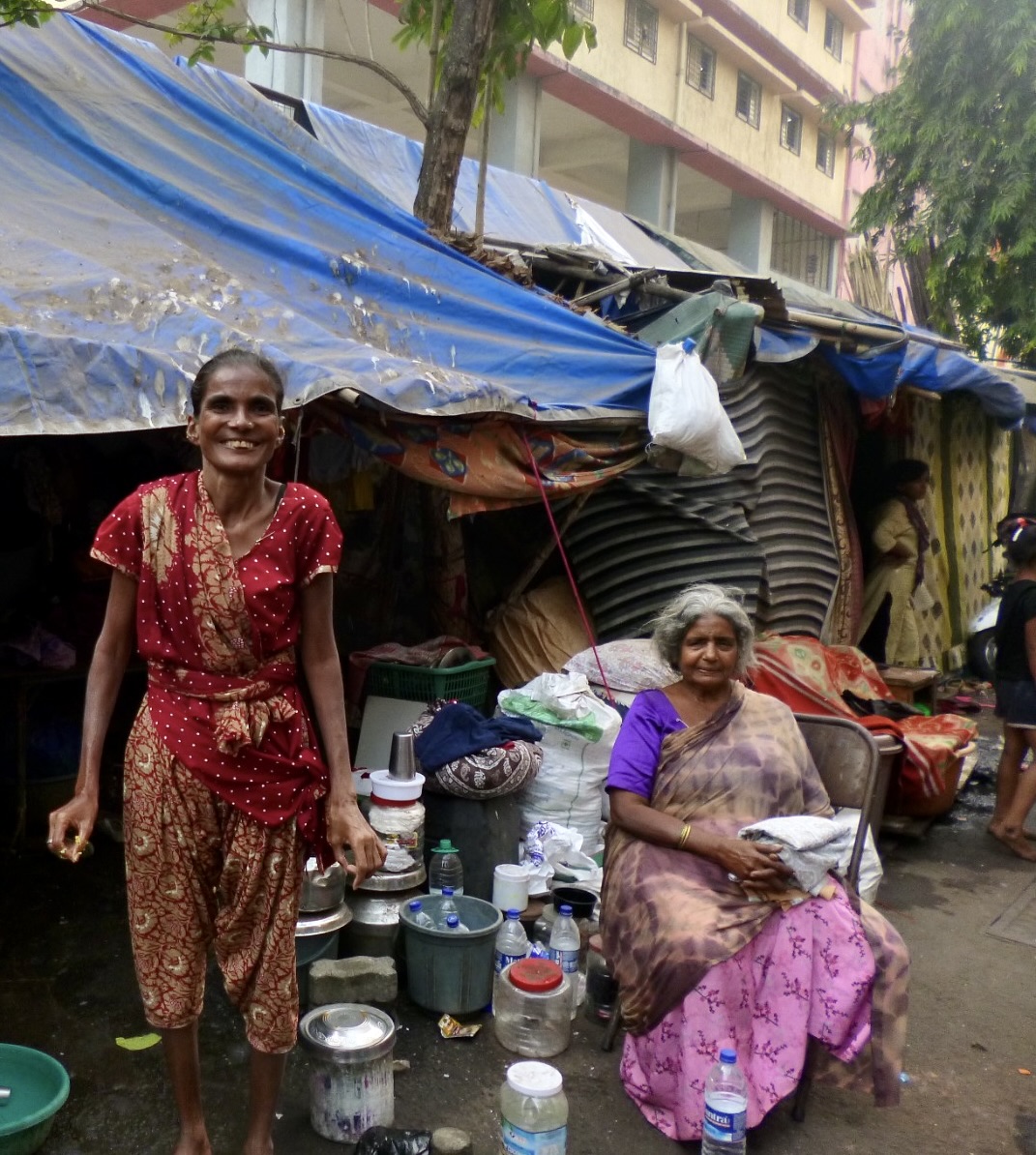
The founder of Pehchan, which started a little over ten years ago, is Brijesh Arya. He was taking us to meet some of people that they worked with, in order to get a little more understanding of how they live. After Mahim, we went into Kamathipura. It was a red-light district set up by the British in the nineteenth century to cater for its soldiers, and it still is an area where a lot of sex-work is done, alongside being called home by many homeless. These abodes seemed a bit more developed than for the basket weavers. There were some tarpaulin sheets held up by bamboo scaffolding. In front of these were benches where some of the older women sat, gave us tea and chatted while the grandchildren ran around and played. Their children were out at work.
Brijesh and his team were distributing bank books to some people who had already managed to get their ID cards. Being able to keep money in a safe place is a life-changer as so many of the homeless here worked, even if it was for a pittance. Hardly any of them begged. Whether it was as labourers on building sites – and Mumbai is awash with construction – or as artisans, cooks or cleaners, these people are the underbelly of the economic machine that allows the city to grow wealthy.
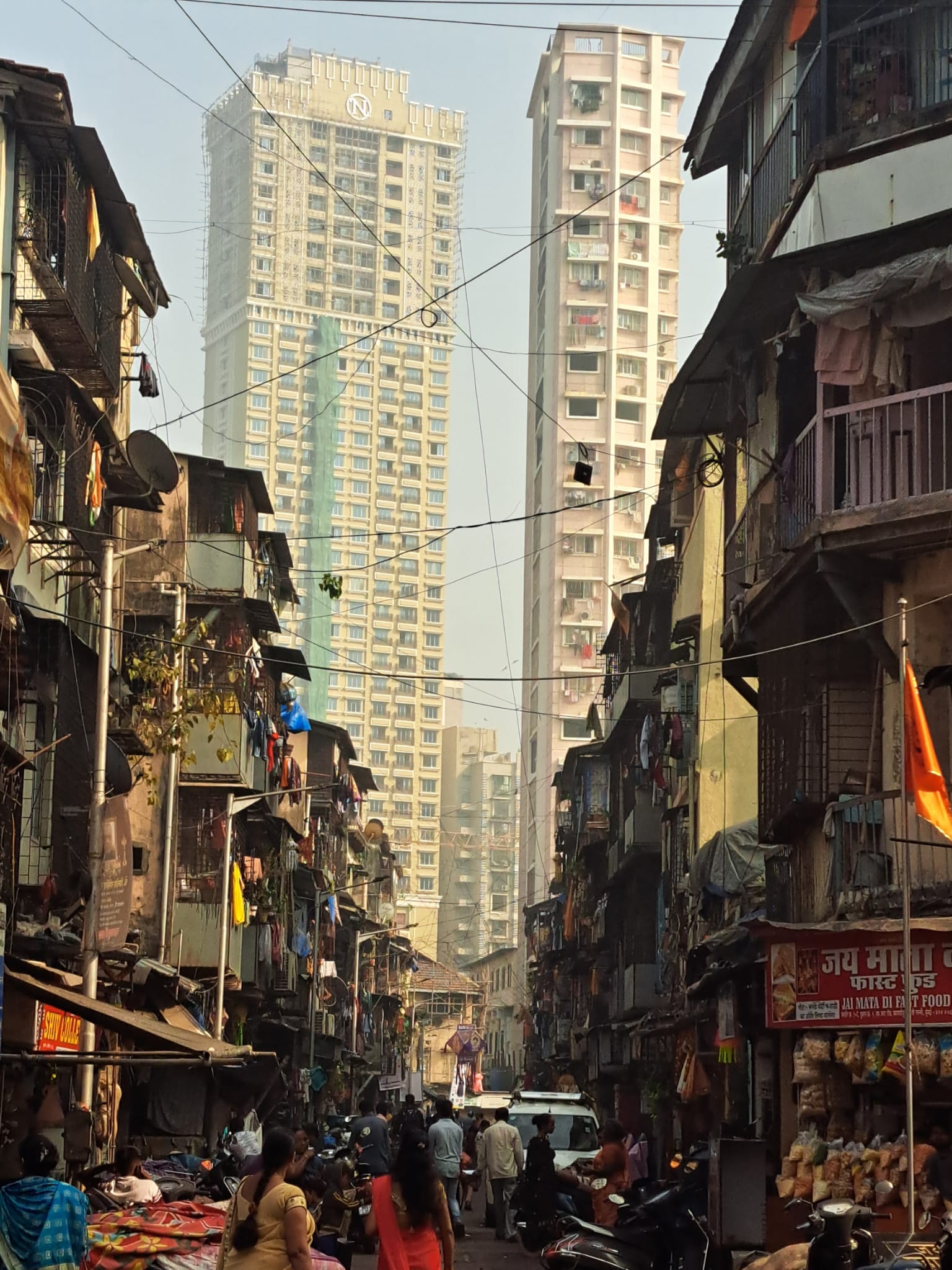
Mumbai has roots very similar to London, in that it was a city created by colonisers. As London grew out of the Romans administrative needs in England, so did Mumbai change from the seven islands first inhabited by the Koli fishermen, and much later the Portuguese, to the headquarters for the English East India Company’s ambitions in India. Both cities encouraged immigrants from all different areas and faiths to build these places of enterprise. Both have now become the financial capitals of their respective countries and are in the top ten for housing the most billionaires. And both can’t seem to make homes for their homeless.
Mumbai has over four times as many people vying for each square kilometre than London, and that’s only going by the number of people included in the counts. You can say that immigrants shouldn’t come to a big city, but how many generations of people living here does it take before someone is called a local? And how much of what we consume has its origins in the labour of the undocumented and the unacknowledged?
The two days spent with Brijesh and his team was a real eye-opener. Fascinating, desperately sad, and inspiring. Listening to the stories of people living these precarious existences put a visible human face on some of the statistics. My parents were economic migrants, travelling first to Kenya and then to the UK. They had a network of people looking out for them, and a bit of luck on their side, but without that, Madhu’s story might easily have been mine.
 theleadlesspencil
1 thought on “India: Days 4 and 5 – A Field Trip”