
I immediately wondered if I was ingesting a gazillion microbes alongside the ancient waters pouring out of the lion’s mouth at St Ann’s Well because it was peculiarly warm. But it tasted pleasant, and I stored some in my water bottle for later hoping the reported healing properties might do a little something for my cold.
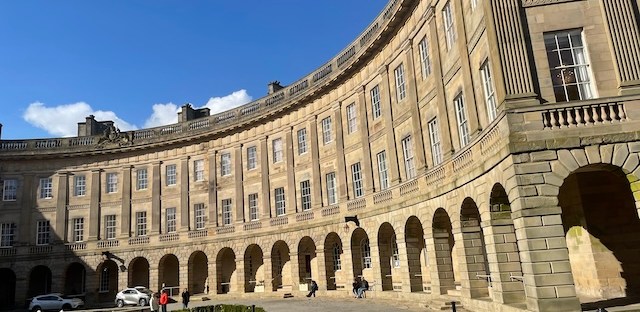
In my head, I believed that I’ve never been through Buxton before, because who could forget such a beautiful town? This Thursday we were lucky to have a crisp autumn day to explore it. With barely a cloud in the sky we were able to stroll around in jumpers, taking in the Victorian elegance of the Conservatory, and the Georgian confidence of the Crescent. According to a blue plaque on our hotel (the oldest hotel in England apparently), Mary, Queen of Scots herself often came and took the waters whilst in custody in England.


Anne had to remind me that I had been here before, on my cycle ride from Lincoln to Liverpool in 2021. I would like to think that the speed of my wheels was so fast it must have all been a blur, but I know how slowly I cycle. I could also blame my bad memory on my perimenopausal state, but it has always been suspect.
Ironically, the menopause was our reason for coming this second time, as we were attending a talk at the Opera House by Dr Louise Newson. Anne wasn’t going to come originally, having gone through perimenopause already. But in the end, the lure of a mini holiday swayed her.
Dr Newson has been in the news a lot recently, with a Panorama programme revealing that some of the patients in her private clinic weren’t getting the benefits of the HRT and were possibly being harmed by the higher than standard doses they were taking. We had booked the tickets with my sister and cousin weeks before the bad press, so we weren’t sure how she would handle it all.
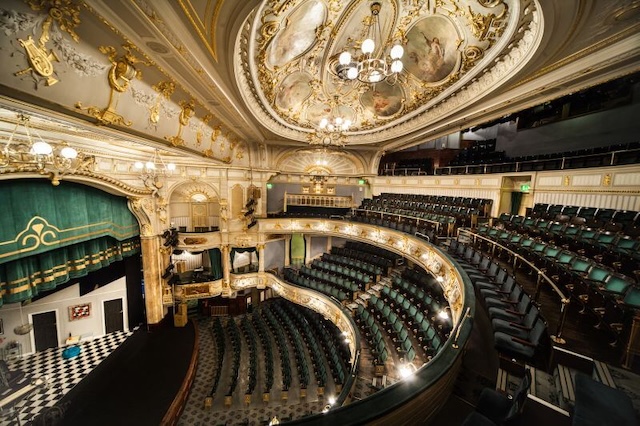
It was a full house in the beautiful Edwardian theatre. We’d settled ourselves in the stalls after traipsing up and down the labyrinthine stairs and corridors looking for some loos that didn’t have a queue. For a talk about the hormones and menopause, the overwhelming audience was women of a certain age, so it was a difficult ask, but we managed to find some right up at the top.
It was an entertaining and interesting show, punctuated by a comedian who popped in at various points, although it could have been more informative. There was a lengthy history about how shit the medical profession has been to women over the ages. You know, the usual: locking women up in asylums for being ‘hysterical’, assuming women had wombs that moved or could fall out, blocking women from practising medicine for a variety of reasons, etc, etc.
That history could have been edited down given that her audience didn’t need convincing, but there was enough in the talk that I came away with lots of questions that I’d not considered before, such as:
- if some doctors are advocating using some drugs like Statins as standard for life after a person reaches a certain age, why would HRT, given how drastic the changes are during perimenopause and menopause, not also be a standard?
- why isn’t a woman who comes to the doctor with mental health issues automatically checked for hormone levels before she’s prescribed anti-depressants?
- if natural hormones are derived from plants such as soy and yams (not something she told us) then will eating more tofu and yams help?
I don’t know what will happen about the investigation into her (she didn’t dwell on it in the talk) but Dr. Newson is one of the people who have pushed the whole conversation around menopause into the limelight over the last decade and made it so that woman can start asking questions and demanding more specific plans.
Anne was also glad she came because the old idea of taking HRT only when your hormones are helter-skeltering is finally being ridiculed. A woman’s hormones will often remain low after the transition stage: causing more women to get bone fractures in later years than men; causing more women to die from heart disease in later years than men; possibly causing more cognitive-related issues like dementia in women than men.
There are also links between the auto-immune disease that Anne has and the sudden drop in hormone levels. So, we were left with more questions than answers. But at least we’re asking the questions.
If you want to read all my posts without resorting to the likes of Facebook, please add your email below to get them sent to you directly.
 theleadlesspencil